

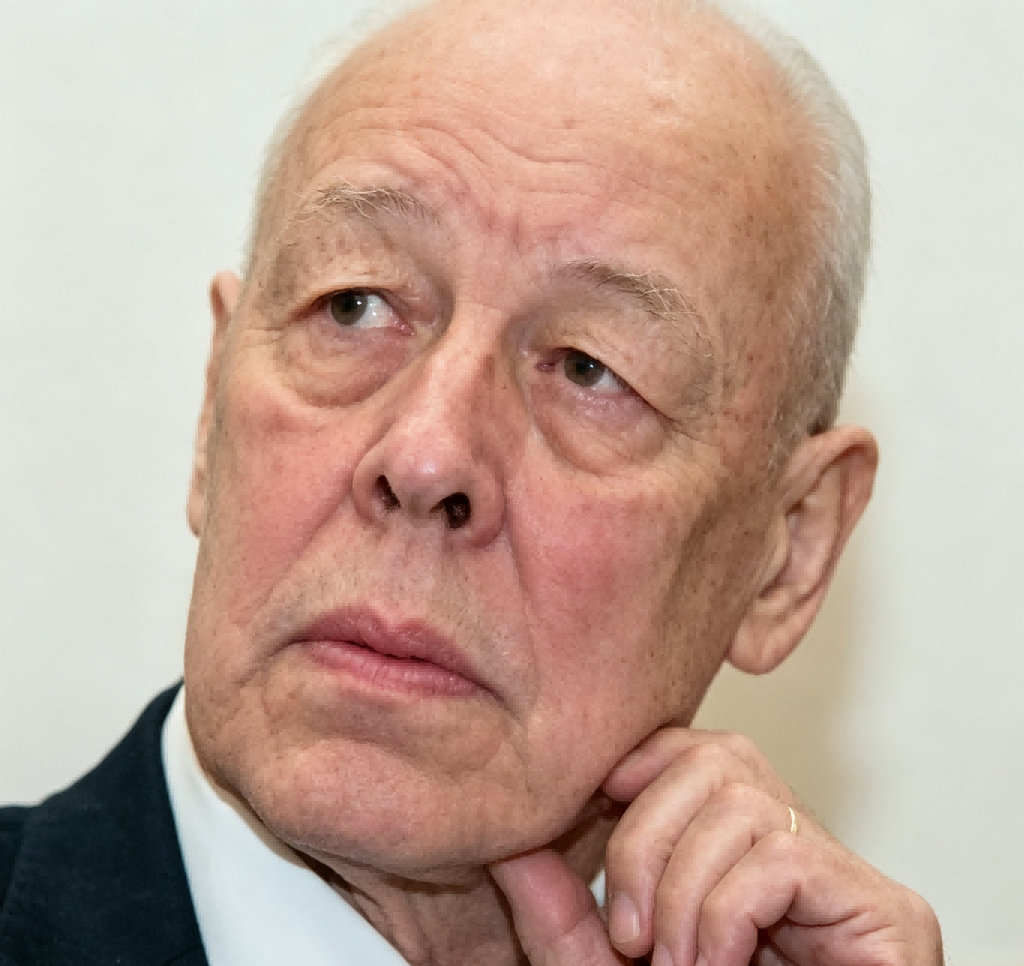
His research encompasses comparative linguistics, ethnohistory, field linguistics, and language revitalisation, with particular emphasis on the Uralic, Mongolic, and Tungusic language families of northern Eurasia. He is internationally recognised for his reconstruction of Proto-Samoyedic and Proto-Uralic, his critical reassessment of the Altaic hypothesis, and his authoritative studies of the Mongolic languages. His extensive body of work includes such influential publications as Samojedischer Wortschatz (1977), Manchuria: An Ethnic History (1996), the landmark edited volume The Mongolic Languages (2003), New Materials on the Khitan Small Script (2010, with Wu Yingzhe), and the comprehensive grammar Mongolian (2012). Beyond historical and comparative linguistics, he has contributed substantially to international efforts to document and protect endangered languages, including the UNESCO Atlas of the World’s Languages in Danger and the Endangered Languages Catalogue (ElCat). The five selected works below—covering the revitalisation of Nivkh on Sakhalin (2018), the PEEX synthesis of land–atmosphere–ocean–society interactions (2016), shared drift in bound morphology across Eurasia (2012), his monographic grammar Mongolian (2012), and new materials on the Khitan small script (2010)—encapsulate a career dedicated to reconstructing the linguistic history of northern Eurasia while preserving the living cultural heritage of its diverse and endangered speech communities.

The International Academy of Eurasian Sciences is an international scientific organisation established in January 1994 and registered in the United Nations as a non-governmental organisation of UNESCO.
International Eurasian Academy of Sciences ASEAN Centre
secretariat@ieasth.org membership@ieasth.org