

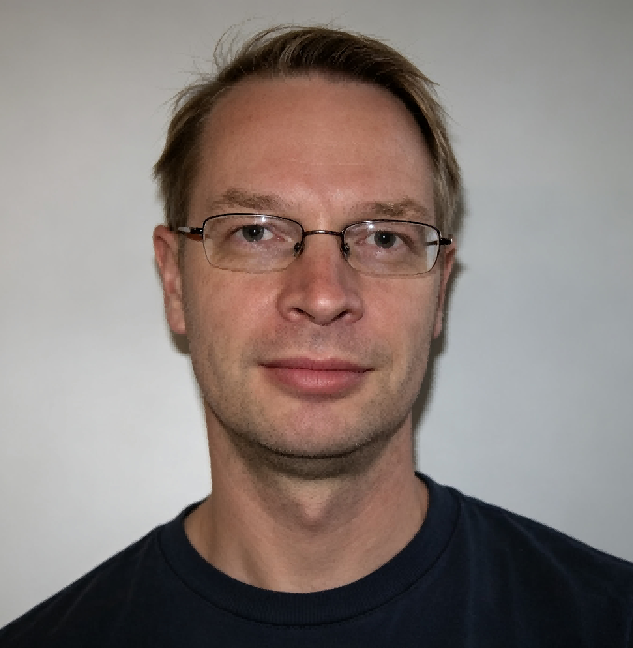
His research has focused on the formation, transformation, and climatic effects of atmospheric aerosol particles, particularly new particle formation and growth, aerosol–cloud interactions, and the coupling between air quality and climate. Through long-term measurements at the SMEAR II station in Hyytiälä and extensive international observation networks, he has made major contributions to understanding the molecular mechanisms of atmospheric nucleation and the roles of sulfuric acid, ammonia, amines, and biogenic vapours in particle formation. His work has further revealed substantial spatial variability in new particle formation across contrasting environments, from boreal forests to densely populated Chinese megacities, thereby strengthening the scientific basis for assessing aerosol effects on climate and air quality. He has authored 293 peer-reviewed publications, with an h-index of 67, more than 16,700 citations, and seven papers published in Nature and Science. His selected works on atmospheric particle formation, aerosol pollution in China, and the effects of emission-control policies illustrate a research career that has connected fundamental aerosol physics with large-scale environmental observation and provided important scientific foundations for climate assessment and air-quality management across Eurasia.

The International Academy of Eurasian Sciences is an international scientific organisation established in January 1994 and registered in the United Nations as a non-governmental organisation of UNESCO.
International Eurasian Academy of Sciences ASEAN Centre
secretariat@ieasth.org membership@ieasth.org