

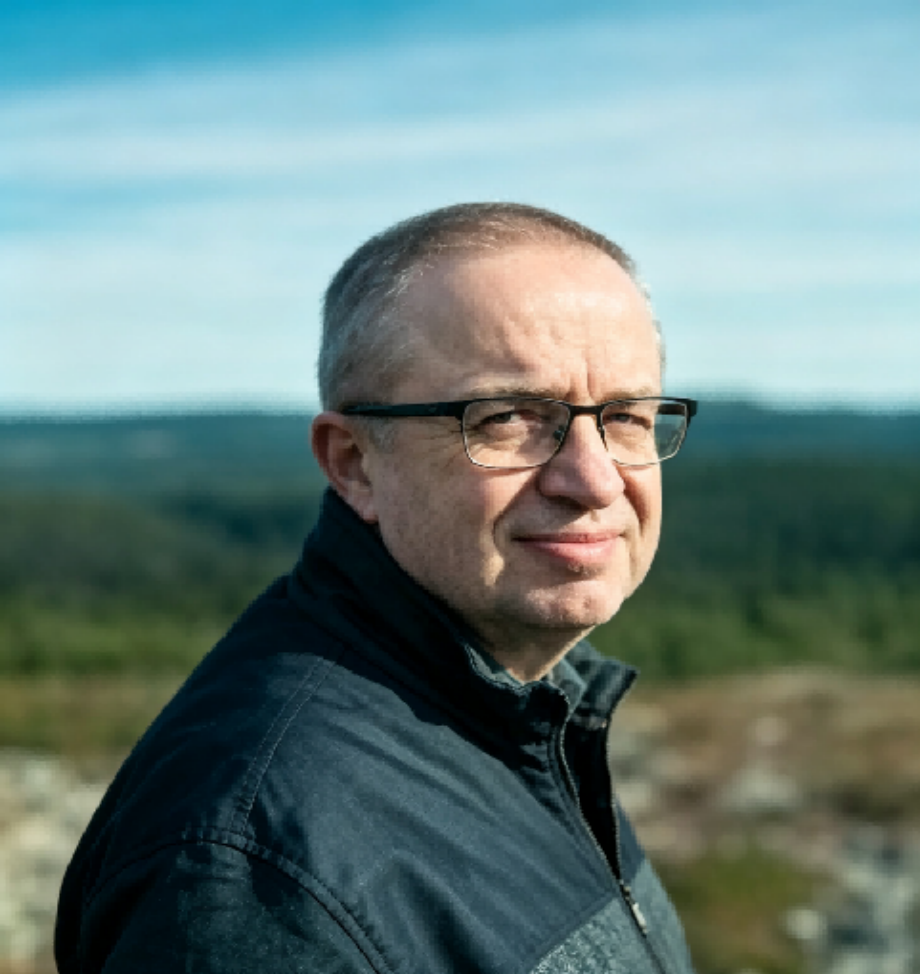
Professor Kulmala’s research has centred on atmospheric new particle formation, aerosol–cloud–climate interactions, and the coupled processes linking the biosphere, atmospheric composition, and climate. His work has advanced understanding of the molecular mechanisms governing gas-to-particle conversion and the role of atmospheric aerosols in air quality and climate regulation. Through the Pan-Eurasian Experiment (PEEX) and related Global Earth Observatory initiatives, he has further promoted an integrated network of long-term observation stations designed to monitor interactions within the Earth system across regional and continental scales. He has authored more than 1,100 peer-reviewed publications, with an h-index of 117, more than 57,600 citations, and 34 papers published in Nature and Science, placing his scholarly influence among the highest in the environmental sciences. His selected publications address global Earth-system observation, molecular mechanisms of atmospheric particle formation, air-quality challenges in China, secondary particle formation, and the chemistry of atmospheric nucleation. Together, these contributions reflect a sustained effort to establish a quantitative, observation-driven understanding of the atmosphere as an integral component of the coupled Earth system and to provide the scientific foundations for effective climate and air-quality policy across Eurasia and globally.

The International Academy of Eurasian Sciences is an international scientific organisation established in January 1994 and registered in the United Nations as a non-governmental organisation of UNESCO.
International Eurasian Academy of Sciences ASEAN Centre
secretariat@ieasth.org membership@ieasth.org