

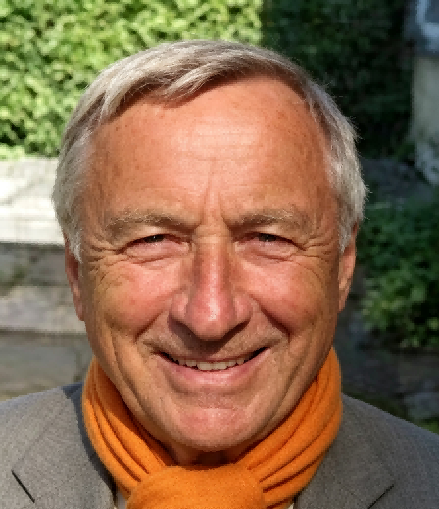
Professor Larsen’s research has centred on the observation, theoretical analysis, and numerical modelling of atmospheric flows within the planetary boundary layer, with particular emphasis on wind-turbine wakes, wind-farm efficiency, and turbulent exchanges of momentum, heat, and scalars across air–sea and air–land interfaces. His Larsen wake model, derived from the Reynolds-averaged Navier–Stokes equations with a mixing-length turbulence closure, has become an influential engineering framework for predicting wake velocity deficits and expansion in both onshore and offshore wind farms, contributing to the scientific basis of wind-farm design and optimisation. He has also made important contributions to the study of the Martian atmospheric boundary layer and to the broader theory and modelling of planetary boundary-layer processes. His selected works address the Martian atmospheric planetary boundary layer, the nature and modelling of atmospheric planetary boundary layers, wind-farm efficiency modelling, turbulent fluxes at the air–ocean interface, and pollutant diffusion within the atmospheric boundary layer. Collectively, these contributions demonstrate a sustained research programme linking fundamental atmospheric fluid dynamics with practical advances in wind-energy science and the modelling and optimisation of renewable-energy systems.

The International Academy of Eurasian Sciences is an international scientific organisation established in January 1994 and registered in the United Nations as a non-governmental organisation of UNESCO.
International Eurasian Academy of Sciences ASEAN Centre
secretariat@ieasth.org membership@ieasth.org