

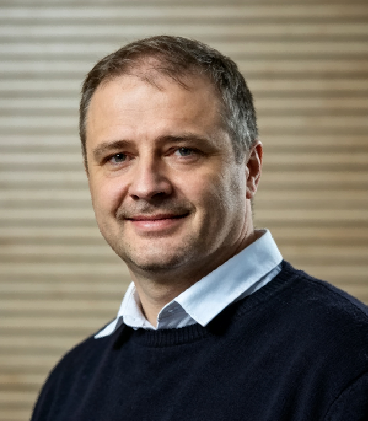
Professor Usoskin’s research has focused on long-term solar variability, the heliospheric modulation of cosmic rays, and the effects of energetic solar and galactic particles on the terrestrial environment, with particular emphasis on reconstructing solar activity over millennial timescales using cosmogenic isotopes preserved in tree rings, ice cores, and meteorites. His work has contributed to the development of reliable calibration methods for historical sunspot records and to quantitative modelling of cosmic-ray-induced ionisation in the atmosphere, providing important tools for investigating long-term solar activity and its influence on the near-Earth environment. He has authored 391 peer-reviewed publications, with an h-index of 50 and more than 9,600 citations, including three papers published in Nature and Science. His selected works address the reconstruction of sunspot numbers over the past millennium, comparisons of recent solar activity with the preceding 11,000 years, heliospheric modulation of cosmic rays from 1951 to 2004, cosmic-ray-induced atmospheric ionisation, and extreme solar particle storms. Collectively, these contributions reflect a sustained research programme connecting fundamental solar and heliospheric physics with the study of long-term space-climate variability, space-weather phenomena, and the radiation environment surrounding Earth.

The International Academy of Eurasian Sciences is an international scientific organisation established in January 1994 and registered in the United Nations as a non-governmental organisation of UNESCO.
International Eurasian Academy of Sciences ASEAN Centre
secretariat@ieasth.org membership@ieasth.org