

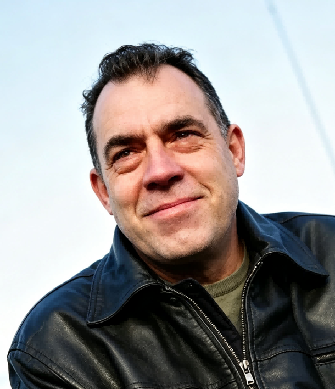
Professor Vesala’s research has focused on biosphere–atmosphere interactions and biogeochemical cycles, particularly the exchange of carbon and water in boreal forests, wetlands, lakes, and agricultural ecosystems, across scales ranging from cells and leaves to ecosystems, regions, and the global environment. Through the sustained development and application of eddy-covariance methods, he has advanced quantitative understanding of the environmental controls governing carbon dioxide and water-vapour exchange, the contribution of diffuse radiation to terrestrial productivity, and the responses of northern ecosystems to autumn warming and early snowmelt. He is co-author of the influential textbook Eddy Covariance: A Practical Guide to Measurement and Data Analysis (Springer, 2012), which has become an important reference for eddy-covariance measurements and data analysis. He has authored 327 peer-reviewed publications, with an h-index of 69 and more than 24,800 citations, including four papers published in Nature and Science. His selected works address gridded estimates of methane emissions from northern wetlands, standardised long-term observations of carbon and greenhouse-gas exchange across European terrestrial ecosystems, the enhancement of boreal springtime carbon uptake by early snowmelt, optimisation-based analysis of stomatal, mesophyll, and hydraulic conductances, and the influence of leaf water potential on internal humidity and CO₂ dissolution. Collectively, these contributions reflect a sustained research programme connecting process-level ecosystem physiology and micrometeorology with long-term observation systems for understanding carbon and water cycles and monitoring environmental change.

The International Academy of Eurasian Sciences is an international scientific organisation established in January 1994 and registered in the United Nations as a non-governmental organisation of UNESCO.
International Eurasian Academy of Sciences ASEAN Centre
secretariat@ieasth.org membership@ieasth.org