

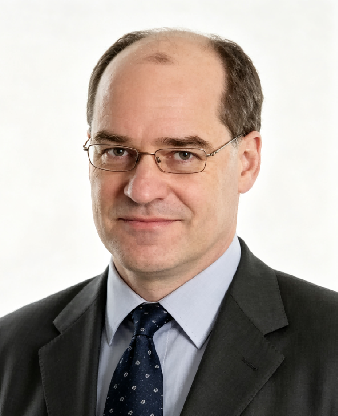
Professor Viisanen’s research has focused on the fundamental processes governing atmospheric aerosol formation and growth, with particular emphasis on the roles of sulfuric acid, ammonia, and galactic cosmic rays in new-particle nucleation, as well as the sources and atmospheric significance of natural aerosols over boreal forests. Through long-term participation in the CLOUD experiment at CERN and research associated with the Pallas Global Atmosphere Watch (GAW) station in northern Finland, he has contributed to the molecular-level understanding of atmospheric nucleation and to the assessment of biogenic aerosol formation and its implications for climate and air quality. His selected works address the roles of sulfuric acid, ammonia, and galactic cosmic rays in atmospheric aerosol nucleation, the molecular mechanisms of sulfuric acid–amine particle formation, natural aerosol loading over boreal forests, homogeneous nucleation rates of water, and the BIOFOR project on biogenic aerosol formation in boreal forests. Collectively, these contributions reflect a sustained research programme connecting molecular-scale studies of aerosol formation with long-term atmospheric observations and the broader scientific understanding of climate and air-quality processes across northern Eurasia.

The International Academy of Eurasian Sciences is an international scientific organisation established in January 1994 and registered in the United Nations as a non-governmental organisation of UNESCO.
International Eurasian Academy of Sciences ASEAN Centre
secretariat@ieasth.org membership@ieasth.org