

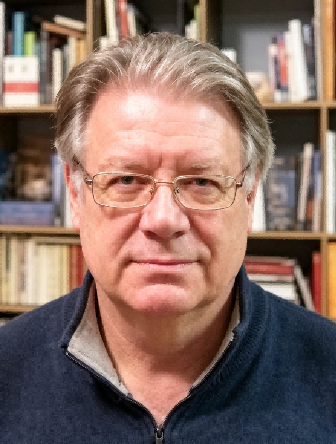
Dr. Vitale’s research has focused on the radiation budget of the atmosphere and the processes through which atmospheric composition and surface characteristics regulate shortwave and longwave radiation across seasonal and interannual timescales. He leads the Climate Change Tower Integrated Project (CCT-IP) at the CNR Arctic Station Dirigibile Italia in Ny-Ålesund, Svalbard, a multidisciplinary research programme investigating the Arctic atmospheric boundary-layer energy budget and the coupled interactions among air, aerosols, clouds, snow, ice, and land. Throughout his career, he has also promoted the development of specialised instrumentation and observation technologies for polar and other demanding environments, with recent efforts directed towards continuous atmospheric observations over the ocean, particularly of radiation and aerosols. His research has contributed to the understanding of polar aerosol optical properties, ozone-depletion events, and the radiative consequences of changes in atmospheric composition. His selected works address the Year of Polar Prediction in the Southern Hemisphere, aerosol optical properties in the Arctic, remote sensing of aerosols in polar regions, the response of the European ozone column to the 2011 Arctic ozone-depletion event, and seasonal variations in particle number size distributions at Dome C, Antarctica. Collectively, these contributions reflect a sustained research programme connecting atmospheric radiative-transfer physics with integrated polar observation, climate-system research, and international environmental monitoring.

The International Academy of Eurasian Sciences is an international scientific organisation established in January 1994 and registered in the United Nations as a non-governmental organisation of UNESCO.
International Eurasian Academy of Sciences ASEAN Centre
secretariat@ieasth.org membership@ieasth.org