

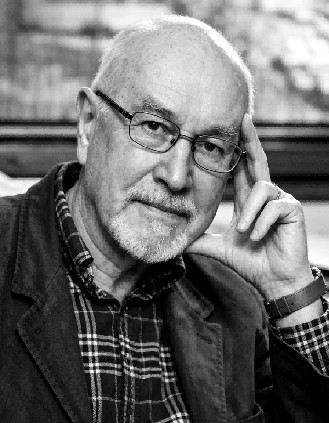
Professor Zilitinkevich’s research spanned more than six decades and established influential theoretical frameworks for understanding atmospheric turbulence, planetary boundary layers, air–sea coupling, and environmental fluid dynamics. His 1970 monograph, Dynamics of the Atmospheric Boundary Layer, became a classic reference in the field. Among his lasting theoretical contributions were the Zilitinkevich constant in the resistance law for neutrally stratified boundary layers, theoretical descriptions of the upper oceanic boundary layer, and parameterisations of turbulence under stable stratification. These developments have informed the representation of boundary-layer processes in numerical weather-prediction and climate models. He authored more than 200 peer-reviewed publications and nine books and supervised more than 20 Ph.D. students from numerous countries, many of whom subsequently became independent researchers and long-term scientific collaborators. His scientific legacy is also reflected in the Zilitinkevich Award, established by the International Eurasian Academy of Sciences, the World Meteorological Organization, and partner institutions to recognise outstanding contributions to atmospheric science, and in the continued development of PEEX, an international research programme whose scientific foundations he helped establish. Collectively, these contributions reflect a distinguished scientific career that advanced the theoretical foundations of atmospheric boundary-layer physics while fostering international cooperation in the study of climate and environmental change across Eurasia.

The International Academy of Eurasian Sciences is an international scientific organisation established in January 1994 and registered in the United Nations as a non-governmental organisation of UNESCO.
International Eurasian Academy of Sciences ASEAN Centre
secretariat@ieasth.org membership@ieasth.org