

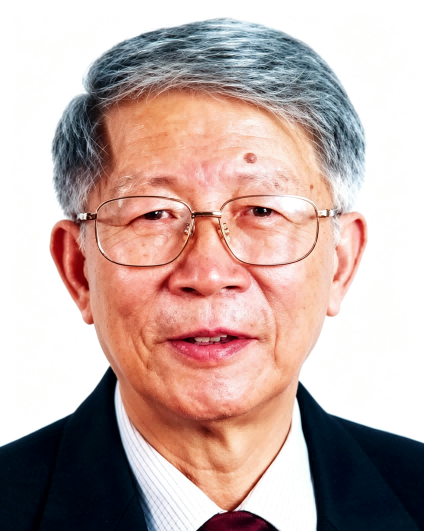
Professor Dai’s research has focused on the geology and geochemistry of natural gas, with particular emphasis on the formation, genetic classification, and exploration of coal-derived gas. In 1979, he published the landmark study “Natural Gas and Oil Formed During Coalification,” proposing that coal measures constitute important industrial hydrocarbon source rocks and establishing a theoretical basis for recognising coal-derived gas as a major natural-gas resource alongside oil-derived gas. Through systematic geological investigation and extensive field sampling across China, he collected more than 3,000 gas samples and accumulated over 80,000 measurements of gas composition and carbon, hydrogen, and helium isotopes. These studies contributed to comprehensive theoretical frameworks for the genetic classification of natural gases, the formation and enrichment of coal-derived gas, and the geological conditions governing the formation of large and medium-sized gas fields. His research provided important scientific support for natural-gas exploration in China, including the discovery and development of the Changqing gas field and other major gas accumulations. He has authored more than 200 publications and three major monographs, including Large Gas Fields in China and Their Gas Sources (2003), Large Coal-Derived Gas Fields in China and Their Gas Sources (2014), and Large Gas Fields in China and Their Gas Sources (2024). His work has helped establish coal-derived gas as a major component of China’s natural-gas resource base and has contributed to the scientific and technological development of the country’s natural-gas exploration industry.

The International Academy of Eurasian Sciences is an international scientific organisation established in January 1994 and registered in the United Nations as a non-governmental organisation of UNESCO.
International Eurasian Academy of Sciences ASEAN Centre
secretariat@ieasth.org membership@ieasth.org