

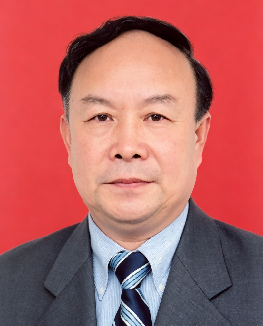
Professor Duan’s research has focused on the chemistry of Chinese materia medica resources, resource recycling and utilisation, and the identification of bioactive substances and compatibility relationships in traditional Chinese medicine, with particular emphasis on establishing Chinese materia medica resource chemistry as an interdisciplinary field and developing approaches to the circular and green utilisation of traditional medicinal resources. Through leadership of major national research programmes, he developed a systematic technical framework for investigating bioactive substances in traditional Chinese medicine and methodological approaches for the fundamental study of compatibility and contraindications, providing a scientific basis for the safety and efficacy of clinical medication and the development of new traditional Chinese medicines. As Chief Scientist of the National 973 Programme, he has led more than twenty national-level projects, including projects under the National Science and Technology Support Programme. He has authored more than 580 academic papers, including over 260 SCI-indexed publications, and has been recognised among Elsevier’s Highly Cited Chinese Scholars for seven consecutive years. He has edited more than ten academic monographs and served as Chief Editor of the undergraduate textbook series Chinese Materia Medica Resources and Development, contributing to the development of systematic teaching materials in the field. He holds more than 120 authorised patents and has contributed to the development of eighteen new traditional Chinese medicines, medicinal materials, and functional products. His contributions have been recognised through three National Science and Technology Progress Awards (Second Prize), ten Provincial/Ministerial Science and Technology Awards, and a Jiangsu Provincial Teaching Achievement Award (Second Prize). Collectively, his work reflects a sustained research programme connecting traditional Chinese medicine with modern resource chemistry, pharmaceutical development, and sustainable resource utilisation, contributing to the scientific development and green transformation of traditional Chinese medicine in China and the broader Eurasian region.

The International Academy of Eurasian Sciences is an international scientific organisation established in January 1994 and registered in the United Nations as a non-governmental organisation of UNESCO.
International Eurasian Academy of Sciences ASEAN Centre
secretariat@ieasth.org membership@ieasth.org