

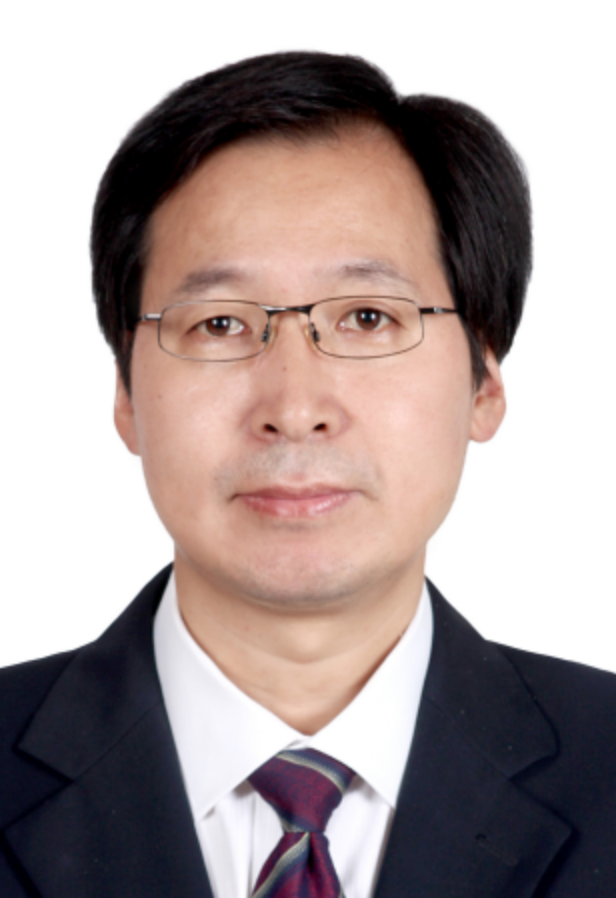
Professor Fang’s research has focused on urban geography, urban agglomeration development, and the resource and environmental effects of urbanisation, with particular emphasis on the theoretical mechanisms and practical pathways of sustainable urban development in China. His work on the interaction between urbanisation and the ecological environment has led to the development of the “Coupling Circle Theory,” which describes the nonlinear relationship between urban development and environmental quality, including the proposed U-shaped relationship between urban growth and environmental pressures. He also proposed the “Botai Line” as a spatial demarcation for analysing differences in population distribution, urbanisation, and regional development across China, providing a framework for understanding the spatial organisation of urban and regional development. Through leadership of major national research programmes, he has contributed to research supporting China’s new-type urbanisation strategy and the assessment of resource and environmental conditions associated with “Beautiful China” development. He currently leads a National Science and Technology Major Project on differentiated standards and model-city development for beautiful urban development in the Beijing–Tianjin–Hebei region and directs a National Natural Science Foundation of China Innovative Research Group project on integrated urban–rural development. He has authored numerous peer-reviewed publications in international journals and holds multiple patents, with his contributions recognised through the National Science and Technology Progress Award and multiple Provincial/Ministerial Science and Technology Awards. Through sustained research, national strategic consulting, and international academic collaboration, Professor Fang has contributed to connecting urban-geographical theory with practical approaches to spatial planning, sustainable urbanisation, resource and environmental management, and regional development in China.

The International Academy of Eurasian Sciences is an international scientific organisation established in January 1994 and registered in the United Nations as a non-governmental organisation of UNESCO.
International Eurasian Academy of Sciences ASEAN Centre
secretariat@ieasth.org membership@ieasth.org