

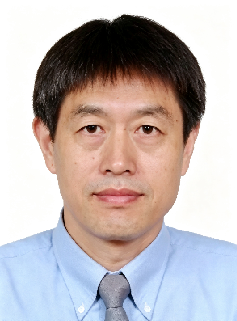
Professor Fang’s research has focused on terrestrial ecosystem carbon cycling, vegetation science, ecological stoichiometry, and remote sensing ecology, with particular emphasis on quantifying carbon stocks and fluxes across terrestrial ecosystems in China and at the global scale. He was among the first researchers in China to undertake systematic studies of terrestrial ecosystem carbon cycling, contributing to quantitative understanding of carbon storage, emissions, and exchanges within terrestrial ecosystems and their implications for climate-change mitigation. Through extensive field investigation and vegetation surveys, he contributed to the systematic characterisation of China’s vegetation resources and the assessment of the distribution of more than 11,000 woody plant species, while leading the compilation of the major reference work Flora of Chinese Vegetation. His research in ecological stoichiometry further led to the formulation of the “limiting element stability” hypothesis, while his work on remote sensing contributed to the development of quantitative approaches for monitoring terrestrial ecosystems. He also developed the theoretical framework of “grass-based animal husbandry,” linking grassland ecology with livestock production and resource management. He has authored hundreds of peer-reviewed publications and supervised and trained numerous ecologists and environmental scientists. Collectively, his work reflects a sustained research programme connecting fundamental ecological theory with the quantitative assessment of carbon cycling, vegetation dynamics, biodiversity, and sustainable ecosystem management in China and globally.

The International Academy of Eurasian Sciences is an international scientific organisation established in January 1994 and registered in the United Nations as a non-governmental organisation of UNESCO.
International Eurasian Academy of Sciences ASEAN Centre
secretariat@ieasth.org membership@ieasth.org