

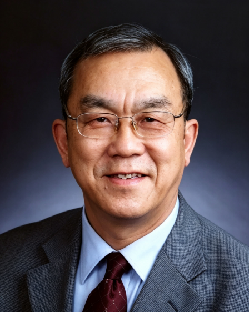
Professor Gong’s research has focused on aerospace optoelectronic remote sensing technology, with particular emphasis on infrared remote sensing instruments, radiometric calibration, and space science experiments under microgravity conditions. Early in his career, he conducted research on static infrared horizon sensors, with results subsequently applied to attitude sensing for China’s geosynchronous spin-stabilised satellites. He was among the first researchers in China to develop aerospace infrared remote sensing instruments and associated radiometric calibration technologies, leading the development of the Very High Resolution Scanning Radiometer for the FY-1 meteorological satellite, China’s first aerospace infrared remote sensing instrument. The instrument was subsequently adopted for international operational satellite applications. He also led the development of a space-based protein crystal growth facility and successfully conducted China’s first crystal-growth experiment under microgravity conditions in space. In the early 1990s, he served as Chief Designer of the Application System for the Shenzhou spacecraft and, from 2001, as Chief Expert of the National 863 Programme in aerospace remote sensing technology. In these capacities, he contributed to the development of space-based optical and microwave remote sensing, space science exploration, and microgravity research. He has authored numerous peer-reviewed publications and holds multiple patents, and his contributions have been recognised through several National and CAS Science and Technology Progress Awards (First Prize). Through sustained leadership of major national aerospace programmes and participation in international scientific collaboration, Professor Gong has contributed to the development of optoelectronic remote sensing technologies and their application to Earth observation, space science, and China’s aerospace research and engineering programmes.

The International Academy of Eurasian Sciences is an international scientific organisation established in January 1994 and registered in the United Nations as a non-governmental organisation of UNESCO.
International Eurasian Academy of Sciences ASEAN Centre
secretariat@ieasth.org membership@ieasth.org