

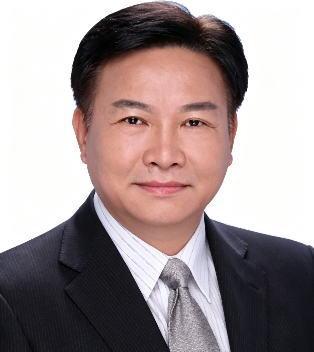
Professor Huang’s research has focused on enzyme engineering, biocatalysis, and the high-value utilisation of biomass resources, with particular emphasis on developing biotechnological processes for converting agricultural and industrial by-products into high-value biochemicals and bioenergy. During his doctoral studies in the United Kingdom, he developed a stepwise release method for microbial intracellular products. Following his return to China, he led the development and industrial application of several technologies, including the extraction of superoxide dismutase (SOD) from pig blood and the microbial fermentation production of hyaluronic acid, both of which were subsequently commercialised. In recent years, his research has extended to the intersection of artificial intelligence and biotechnology, including the use of large language models and generative AI in enzyme engineering and the development of an “AI + Biocatalysis” innovation framework. Through his continued involvement in national key laboratories, major research programmes, and scientific collaboration, Professor Huang has contributed to the development of bioengineering approaches for sustainable biomanufacturing, biomass utilisation, and the application of digital technologies in biotechnology.

The International Academy of Eurasian Sciences is an international scientific organisation established in January 1994 and registered in the United Nations as a non-governmental organisation of UNESCO.
International Eurasian Academy of Sciences ASEAN Centre
secretariat@ieasth.org membership@ieasth.org