

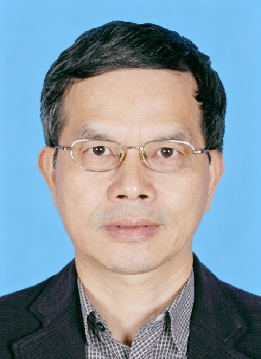
Professor Li’s research programme encompasses remote sensing, geographic information science, and geospatial artificial intelligence, with particular emphasis on land-use change modelling, urban remote sensing, and the integration of cellular automata with multi-criteria evaluation for simulating complex spatial dynamics. Through sustained research and leadership of major national research programmes and international collaborative networks, he has contributed to the development of geospatial AI methodologies, the monitoring and modelling of rapid urbanisation in China, and the application of remote sensing to land-resource management and sustainable development. His work has been published in peer-reviewed journals including Nature, Science, and PNAS, and he has been recognised among highly cited researchers in the geosciences. Through continued research, programme leadership, and international scientific collaboration, Professor Li has contributed to connecting advances in geospatial science with practical applications in urban governance, land-resource management, and sustainable development.

The International Academy of Eurasian Sciences is an international scientific organisation established in January 1994 and registered in the United Nations as a non-governmental organisation of UNESCO.
International Eurasian Academy of Sciences ASEAN Centre
secretariat@ieasth.org membership@ieasth.org