

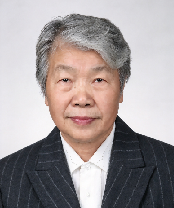
Professor Tang’s research has centred on soil erosion processes, soil and water conservation, and sustainable management of the Loess Plateau, with particular emphasis on the spatial and temporal patterns of soil erosion, identification of critical erosion zones, and scientific approaches to returning farmland to forest and grassland. Through extensive field investigations across the Loess Plateau, she systematically examined the spatial and temporal evolution of soil erosion and identified the semi-arid wind–water erosion transitional zone as a major concentration area of severe erosion. Her research proposed an upper-limit slope criterion for returning farmland to forest and grassland based on the critical slope of approximately 15°–20° associated with the development of shallow gullies, and recommended restricting cultivation on slopes exceeding 25°. She also introduced the concept of the “erosion chain” in slope–gully systems, providing a framework for integrating studies of erosion processes with ecological management of the Loess Plateau and governance of the Yellow River basin. Author of numerous peer-reviewed publications and monographs, Professor Tang has contributed to the scientific development of soil conservation, ecological restoration, and sustainable land management in China. Through sustained field research, leadership of national research platforms, and participation in major research programmes, she has contributed to connecting fundamental soil science with practical applications in soil and water conservation, ecological restoration, sustainable agriculture, and environmental management.

The International Academy of Eurasian Sciences is an international scientific organisation established in January 1994 and registered in the United Nations as a non-governmental organisation of UNESCO.
International Eurasian Academy of Sciences ASEAN Centre
secretariat@ieasth.org membership@ieasth.org