

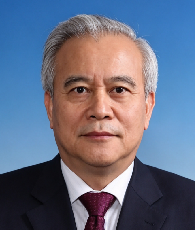
Professor Wang’s research and professional work have focused on informatisation, intelligent systems, geographic information science, and remote sensing, with particular emphasis on the application of spatial information technologies to regional development, environmental monitoring, and digital governance. Through academic research, participation in national research programmes, and policy advisory activities, he has contributed to the development and application of information technologies in areas including regional development, digital transformation, and intelligent manufacturing. He has authored scholarly publications and policy reports addressing information technology, technological innovation, and the integration of digital technologies with traditional industries. His public and academic service has also involved policy discussions concerning informatisation, the digital economy, and technological development. Through sustained academic research and engagement in science and technology policy and public affairs, Professor Wang has contributed to connecting information science and spatial technologies with practical questions of digital development, economic transformation, public governance, and sustainable technological progress.

The International Academy of Eurasian Sciences is an international scientific organisation established in January 1994 and registered in the United Nations as a non-governmental organisation of UNESCO.
International Eurasian Academy of Sciences ASEAN Centre
secretariat@ieasth.org membership@ieasth.org