

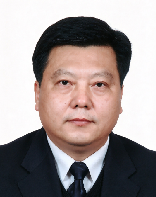
Professor Wu’s research centred on new secondary battery systems and key energy materials, with particular emphasis on high-specific-energy batteries, electrode materials, battery manufacturing processes, and intrinsic safety. He investigated light-element, multi-electron and multi-ion reaction chemistries and led the development of advanced electrode materials, composite ceramic–polymer separators, flame-retardant electrolytes, and other battery-safety technologies. He also proposed safety-threshold boundaries for battery systems and developed approaches for their identification and control. His work on lithium-containing hydrogen-storage alloys contributed to the development of domestic storage-alloy technology, while he established a nickel-metal hydride battery pilot-production base and designed an automated demonstration line, with the resulting battery packs applied to hybrid-electric vehicles. He published more than 700 SCI-indexed papers, authored three academic monographs, and held more than 100 authorised invention patents. His research received a National Technological Invention Award (Second Prize), a National Science and Technology Progress Award (Second Prize), and numerous provincial and ministerial awards, as well as international recognitions including the International Battery Materials Association Award for Scientific Achievement, the Lifetime Achievement Award of the International Association for Lithium Batteries, and the Electrochemical Society Battery Technology Award. Through sustained research, leadership of national programmes, and industrial technology development, Professor Wu contributed to the development of secondary battery technology and energy materials in China and to their application in electric vehicles and energy storage.

The International Academy of Eurasian Sciences is an international scientific organisation established in January 1994 and registered in the United Nations as a non-governmental organisation of UNESCO.
International Eurasian Academy of Sciences ASEAN Centre
secretariat@ieasth.org membership@ieasth.org