

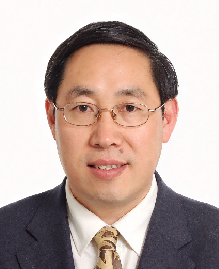
Professor Wu’s research has centred on fundamental particle physics, quantum field theory, quantum gravity, and quantum cosmology. His early work on chiral algebra, CP violation, and quark–lepton flavour physics established theoretical results concerning kaon decays and the ΔI = 1/2 isospin rule, and contributed to the development of models of spontaneous CP violation; these studies were recognised with a Second Prize of the National Natural Science Award. His subsequent research has addressed the theoretical relationship between general relativity and quantum field theory, leading to the development of gravitational quantum field theory and the proposed hyperunified field theory. He has also developed approaches to quantum-field-theory regularisation, spontaneous chiral symmetry breaking in low-energy quantum chromodynamics, holographic QCD, dark matter and dark energy, and early-universe cosmology. As Chief Scientist of the Taiji Programme, he has led theoretical and technological pre-research for China’s space-borne gravitational-wave observatory, including work demonstrated through the Taiji-1 technology demonstration satellite. He has supervised more than twenty doctoral students. Through sustained theoretical research, leadership of major scientific programmes, and academic supervision, Professor Wu has contributed to the development of particle physics, quantum gravity, cosmology, and gravitational-wave research in China.

The International Academy of Eurasian Sciences is an international scientific organisation established in January 1994 and registered in the United Nations as a non-governmental organisation of UNESCO.
International Eurasian Academy of Sciences ASEAN Centre
secretariat@ieasth.org membership@ieasth.org