

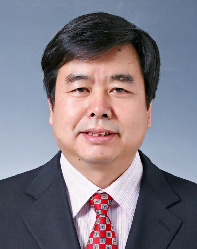
Professor Xu’s research has centred on the evolution and management of soil fertility under long-term cultivation. He has led China’s network of long-term farmland experiments, comprising 42 field stations across 29 provinces, and used long-term observations to investigate changes in soil organic matter and develop quantitative approaches for evaluating the utilisation efficiency of organic materials and setting soil organic-matter targets. His research has also addressed the acidification and declining fertility of red soils in southern China. His team characterised the spatial and temporal evolution of red-soil acidification and identified excessive nitrogen fertilisation as a major driver, subsequently developing technologies for improving nitrogen-use efficiency, reducing fertiliser inputs, and restoring soil fertility. Organic-manure-based amendments and compound soil conditioners developed through this work have been applied in large-scale cultivated-land management programmes. The resulting technologies have been incorporated into a national major project on acidified cultivated land and applied across more than 100 million mu (approximately 6.7 million hectares) in six provinces, with reported increases in crop yields and improvements in soil acidification control. Professor Xu has led more than twenty national research projects, published more than 360 papers as first or corresponding author, authored eight monographs, and holds more than ten authorised invention patents. He has also supervised nearly sixty doctoral and master’s students. Through long-term field experimentation and the integration of research with national cultivated-land programmes, Professor Xu has contributed to the quantitative management of soil fertility and to food security and sustainable cultivated-land management in China.

The International Academy of Eurasian Sciences is an international scientific organisation established in January 1994 and registered in the United Nations as a non-governmental organisation of UNESCO.
International Eurasian Academy of Sciences ASEAN Centre
secretariat@ieasth.org membership@ieasth.org