

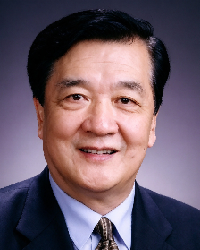
Professor Yan’s research has centred on pulsed power, fusion electrical engineering, applied superconductivity, and electrical technologies for energy and transport. He led the development of large inductive energy-storage systems in China, including a facility used for high-energy laser experiments, and participated in the design and construction of the electromagnetic systems of the CT-6 and CT-8 tokamaks. His work in applied superconductivity produced practical superconducting magnet systems for applications including magnetohydrodynamic power generation and marine propulsion. He also organised research under the national 863 Programme on magnetohydrodynamic power generation and led the development of a large neodymium-iron-boron permanent magnet for the Alpha Magnetic Spectrometer, contributing to the successful deployment of the instrument on the Space Shuttle Discovery in 1998. In the fields of renewable energy and advanced transport, he participated in strategic studies of sustainable energy systems, renewable-energy development, electric vehicles, and magnetic-levitation transportation, including feasibility studies related to the Shanghai maglev demonstration line. Professor Yan has published more than 110 scientific papers, produced numerous evaluated scientific and technological achievements, and received six national and Chinese Academy of Sciences awards for scientific and technological progress. Through sustained engineering research, scientific leadership, and engagement with emerging energy technologies, Professor Yan has contributed to the development of pulsed-power engineering, applied superconductivity, and new electrical technologies in China.

The International Academy of Eurasian Sciences is an international scientific organisation established in January 1994 and registered in the United Nations as a non-governmental organisation of UNESCO.
International Eurasian Academy of Sciences ASEAN Centre
secretariat@ieasth.org membership@ieasth.org