

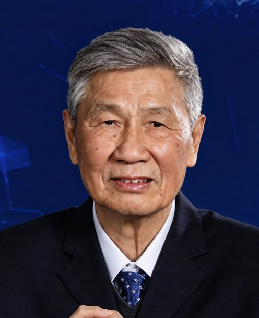
Professor Zeng’s research has centred on the mathematical and physical foundations of numerical weather prediction and geophysical fluid dynamics. In 1961, he developed the semi-implicit difference scheme for solving the primitive equations of the baroclinic atmosphere in practical weather forecasting, contributing to the development of operational numerical weather prediction. He subsequently developed numerical schemes for conserving quadratic quantities and for treating standard atmospheric stratification, which have been applied in weather and climate modelling. His 1979 monograph, The Mathematical and Physical Foundations of Numerical Weather Prediction, contributed to the theoretical development of numerical meteorology. He also played a major role in China’s early meteorological satellite programme, developing the theoretical foundations of atmospheric infrared remote sensing and publishing The Principles of Atmospheric Infrared Remote Sensing in 1974. From the 1980s, his research expanded into climate simulation and prediction, including the development of atmospheric and oceanic general circulation models, land-surface models, and climate and Earth system models. His work addressed the Asian monsoon, China’s marginal seas, seasonal drought and flood prediction, and East Asian dust storms, and he contributed to the climate-modelling chapter of the First Assessment Report of the Intergovernmental Panel on Climate Change. He has received two Second Prizes of the National Natural Science Award, four First Prizes of the Chinese Academy of Sciences for Natural Sciences, and the Ho Leung Ho Lee Prize for Scientific and Technological Progress. Through foundational research, national scientific programmes, and the training of generations of atmospheric scientists, Professor Zeng has contributed to the development of quantitative meteorology and to advances in weather forecasting, climate prediction, satellite remote sensing, and Earth system modelling.

The International Academy of Eurasian Sciences is an international scientific organisation established in January 1994 and registered in the United Nations as a non-governmental organisation of UNESCO.
International Eurasian Academy of Sciences ASEAN Centre
secretariat@ieasth.org membership@ieasth.org