

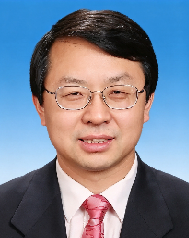
Professor Zhang’s research has centred on rhizosphere nutrition and integrated nutrient management. Over several decades, he has investigated the mechanisms of rhizosphere nutrient activation and plant adaptation to nutrient stress, developed approaches to rhizosphere ecological regulation, and studied intercropping, paddy–upland rotation, and continuous-cropping constraints. This work contributed to an integrated nutrient resource management framework aimed at improving nutrient-use efficiency while reducing environmental impacts, and provided scientific support for China’s soil-testing and formulated-fertilisation programme and its efforts to reduce excessive chemical fertiliser use. In 2009, he established the Science and Technology Backyard model, in which researchers and students live and work alongside farmers to integrate scientific research, agricultural production, technology extension, and local capacity building. The model has subsequently expanded through universities and rural communities across China and has become an approach to linking agricultural science with rural development and green production. Professor Zhang has published more than 700 research papers and over 40 monographs, with work appearing in journals including Science, Nature, and Proceedings of the National Academy of Sciences. His research has received a Second Prize of the National Natural Science Award and a Second Prize of the National Science and Technology Progress Award, among other honours. Through sustained research, technology transfer, and engagement with agricultural communities, Professor Zhang has contributed to advances in plant nutrition, efficient nutrient management, and the development of more resource-efficient and environmentally sustainable agricultural systems in China.

The International Academy of Eurasian Sciences is an international scientific organisation established in January 1994 and registered in the United Nations as a non-governmental organisation of UNESCO.
International Eurasian Academy of Sciences ASEAN Centre
secretariat@ieasth.org membership@ieasth.org