

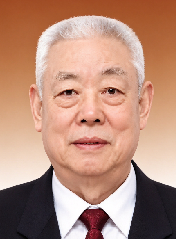
Professor Zhang’s research has centred on combustion stability, high-altitude engine technology, and high-performance liquid propulsion. In the early 1960s, he developed a method combining regenerative cooling with liquid-phase compartmentalisation to address high-frequency combustion instability in advanced liquid rocket engines, providing a technical basis for subsequent strategic-missile and launch-vehicle engine development. He subsequently participated in the development of China’s early high-altitude engines, contributing to advances in high-altitude ignition, restart, and thrust-vector control technologies used in launch vehicles. In 1988, he led propulsion development for the Long March 2E launch vehicle, completing its booster and second-stage engines and contributing to a substantial increase in China’s low-Earth-orbit launch capability. In the 1990s, he advocated the development of liquid oxygen–kerosene propulsion and led research into high-pressure staged-combustion engines. The resulting 120-tonne-class engines have powered the Long March 5, 6, and 7 launch vehicles and provided propulsion technologies for China’s manned spaceflight and lunar exploration programmes. His monograph High-Pressure Staged-Combustion Liquid Oxygen–Kerosene Engines (2005) systematised research in this field. His work has received numerous national and ministerial-level awards, including a First Prize of the National Science and Technology Progress Award in 2017. Through sustained research, engineering development, and technical leadership, Professor Zhang has contributed to the development of China’s liquid rocket propulsion technology and to the advancement of its launch-vehicle and space programmes.

The International Academy of Eurasian Sciences is an international scientific organisation established in January 1994 and registered in the United Nations as a non-governmental organisation of UNESCO.
International Eurasian Academy of Sciences ASEAN Centre
secretariat@ieasth.org membership@ieasth.org