

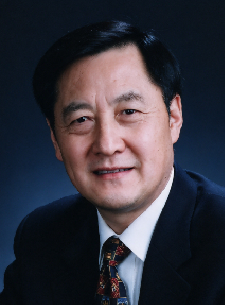
Professor Zhang’s research and policy work have centred on the theory and practice of S&T system reform and innovation-driven development. From the 1980s onward, he participated in research on the new technological revolution and China’s policy responses, contributed to the drafting of the 1984 Decision on the Reform of the Science and Technology Management System, and took part in formulating technology policies for twelve sectors of the national economy. He was involved in the development of the Spark and Torch programmes, research on S&T system reform, the restructuring of public-benefit research institutes, and the implementation of the Sci-tech Olympics programme. His scholarship spans science policy and law, S&T talent, intellectual property, venture capital, high-tech industrial parks, innovation systems, and technology commercialisation. He has published more than 200 papers and over ten monographs and edited volumes, including Research on the Hong Kong Basic Law and the Hong Kong Question, written during his service in Hong Kong from 1988 to 1992, when he participated in work related to the drafting of the Basic Law, as well as Innovation and Incubation and reports on China’s high-tech industries, private technology enterprises, and venture capital. His policy interests include enterprise-led innovation, collaborative innovation, high-tech zones, the digital economy, artificial intelligence, and emerging forms of productive capacity. He has also held professorships and supervised doctoral students at Tsinghua University, Peking University, Renmin University of China, Sun Yat-sen University, and Shanghai Jiao Tong University. Through sustained policy research, participation in national reform programmes, and international academic exchange, Professor Zhang has contributed to the development of science and technology policy research, institutional reform, high-tech industrialisation, and innovation studies in China.

The International Academy of Eurasian Sciences is an international scientific organisation established in January 1994 and registered in the United Nations as a non-governmental organisation of UNESCO.
International Eurasian Academy of Sciences ASEAN Centre
secretariat@ieasth.org membership@ieasth.org