

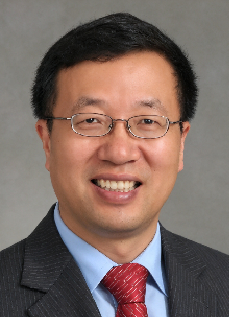
Professor Zhang’s research has centred on improving the representation of physical processes in global climate models and understanding their effects on climate variability and change. Particular attention has been given to moist processes involving clouds, radiation, convection, and boundary-layer physics, together with the interactions and feedbacks among these processes. He has participated in and led field experiments combining upper-air and surface observations with model parameterisations, and developed a cloud-resolving parameterisation scheme that has been adopted by modelling groups internationally. His work on large-scale atmospheric waves examines their generation, propagation, and dissipation and their influence on atmospheric circulation, contributing to the understanding of weather and short-term climate variability. He contributed to the Community Climate System Model (CCSM4) and led international collaborative projects including the Cloud-Integrated Global Model Evaluation Project (CGILS), which investigates the physical mechanisms underlying low-cloud feedbacks. His research has been supported by the US Department of Energy, the National Science Foundation, and NASA. His work has appeared in Nature Communications, Nature Climate Change, Nature Geoscience, and other peer-reviewed journals, receiving more than 12,000 citations. Through sustained research in climate modelling, integration of observations with numerical models, and international scientific collaboration, Professor Zhang has contributed to strengthening the physical basis of climate prediction and to the study of global climate change.

The International Academy of Eurasian Sciences is an international scientific organisation established in January 1994 and registered in the United Nations as a non-governmental organisation of UNESCO.
International Eurasian Academy of Sciences ASEAN Centre
secretariat@ieasth.org membership@ieasth.org