

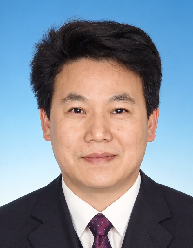
Professor Zhang’s research and engineering work have centred on microwave remote sensing and the design of complex spacecraft systems. In ocean remote sensing, he proposed an integrated active–passive sensing approach in which multiple payloads on a single satellite provide complementary observations and support integrated retrieval. This approach underpinned the development of the HY-2 satellite, launched in 2011 as China’s first ocean dynamic environment monitoring satellite. He also directed the GF-3 satellite, launched in 2016 as China’s first multipolarisation SAR satellite, which incorporated 12 imaging modes for land and ocean applications. In collaboration with Wuhan University and the University of Newcastle, his team obtained satellite interferometric SAR (InSAR) imagery and developed techniques for high-precision ground-subsidence monitoring. Following the 2008 Wenchuan earthquake, he led research into SAR imaging from geosynchronous orbit to overcome the revisit and cloud-penetration limitations of conventional optical remote sensing. After an extended development programme, Ludi Tance-4 01 was launched in 2023 as the first geosynchronous-orbit SAR satellite, providing new capabilities for monitoring floods, water bodies, and other large-scale surface processes. He has led the development of more than 20 remote-sensing satellites and contributed to the HY-2 monitoring series, the GF-3 constellation, and China’s ocean salinity observation programme. His work has received a Second Prize of the National Science and Technology Progress Award and a First Prize of the National Defence Science and Technology Progress Award, and he participated in the manned spaceflight project recognised by the Special Prize of the National Science and Technology Progress Award. Through sustained engineering research and programme leadership, Professor Zhang has contributed to the development of satellite microwave remote sensing, spacecraft systems engineering, and China’s capabilities in space-based observation of the land and marine environment.

The International Academy of Eurasian Sciences is an international scientific organisation established in January 1994 and registered in the United Nations as a non-governmental organisation of UNESCO.
International Eurasian Academy of Sciences ASEAN Centre
secretariat@ieasth.org membership@ieasth.org