

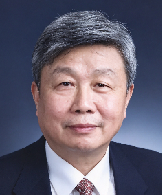
Professor Zhang’s research has centred on digital photogrammetric theory, image matching, automated mapping, and the transition of photogrammetric production from analogue and analytical methods to fully digital workflows. He developed fundamental theoretical relationships for digital photogrammetry and advanced research on multi-baseline image mapping and generalised-point photogrammetry, while introducing image-matching methods capable of addressing problems that were difficult to solve using conventional techniques. Over more than a decade, he led research on fully digital automatic mapping, recognised by a National Natural Science Award and a National Science and Technology Progress Award. In 1994, he initiated the development and internationalisation of the VirtuoZo digital photogrammetric workstation, which incorporated independent Chinese intellectual property and was subsequently deployed in large-scale surveying and mapping applications in China and overseas. Its applications have included topographic-map updating in the Three Gorges region, conservation of the Dunhuang murals, three-dimensional reconstruction of the Bamiyan Buddhas, and satellite-image processing. He later established the Digital Photogrammetry Grid (DPGrid), developed automated processing systems for advanced products from the ZY-3 remote sensing satellite, and proposed cloud-controlled and close-range oblique photogrammetry for geological hazard investigation and monitoring. His work has also extended digital photogrammetry into engineering surveying, archaeology, and digital-city applications. He has published more than 200 papers and books and authored the national planning textbook Digital Photogrammetry. Through sustained theoretical research, technological development, and education, Professor Zhang has contributed to the development and practical application of digital photogrammetry and to advances in surveying, remote sensing, and spatial information science.

The International Academy of Eurasian Sciences is an international scientific organisation established in January 1994 and registered in the United Nations as a non-governmental organisation of UNESCO.
International Eurasian Academy of Sciences ASEAN Centre
secretariat@ieasth.org membership@ieasth.org