

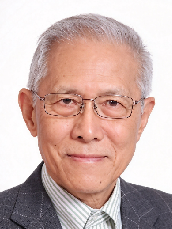
Professor Zhang’s research has centred on mathematical programming and optimisation, with applications ranging from decision support and management information systems to bioinformatics and systems biology. In the 1970s, his work on the convergence theory of mathematical programming, conducted with collaborators, resolved an open problem concerning Rosen’s gradient projection method; the result was subsequently incorporated into graduate-level textbooks internationally. He later applied inverse data envelopment analysis and related optimisation methods to decision support, leading the development of a project evaluation system for China’s national economic information system. Combining mathematical modelling, management science, and computer technology, the system supported the evaluation of information-system scale and benefits, demand forecasting, and investment allocation, and received the First Prize of the IFORS Operational Research in Development Award in 1996. From the late 1990s, Professor Zhang expanded his research into bioinformatics and systems biology, organising interdisciplinary work at the interface of mathematical optimisation and the life sciences and promoting the application of linear, nonlinear, and integer programming to protein structure analysis, biomolecular networks, and complex network optimisation. His broader research has also included artificial neural networks and management information systems, supported by projects funded by the National Natural Science Foundation of China. He has published more than 150 research papers and authored or edited 18 monographs and conference proceedings. Through sustained work in optimisation theory, decision-support applications, and mathematical approaches to the life sciences, Professor Zhang has contributed to the development of operations research in China and to its international engagement.

The International Academy of Eurasian Sciences is an international scientific organisation established in January 1994 and registered in the United Nations as a non-governmental organisation of UNESCO.
International Eurasian Academy of Sciences ASEAN Centre
secretariat@ieasth.org membership@ieasth.org