

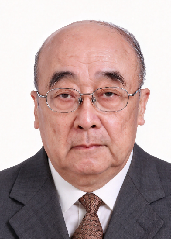
Professor Zhao’s research has centred on the dynamics and prediction of high-impact weather, particularly torrential rain and typhoons. In the 1970s, he and collaborators developed a fine-mesh primitive-equation precipitation model adapted to the observational and computing conditions then available in China. The model was subsequently applied to both rainstorm research and operational forecasting and received the First Prize of the Chinese Academy of Sciences Award for Scientific and Technological Progress and a National Science and Technology Progress Award. His subsequent studies of heavy rainfall and mesoscale weather systems in China contributed to understanding the dynamical mechanisms of rainstorm development, including the role of upper-tropospheric divergence, frontal dynamics, and symmetric instability in Meiyu-front precipitation. He has led or participated in studies of major rainfall and flood events, including the 1998 Yangtze River floods, severe rainfall in the middle and lower Yangtze region, and mesoscale convective systems associated with major precipitation events in South China. His broader research encompasses extratropical cyclone development, frontal dynamics, multiscale circulation and interactions in the Asian–Australian monsoon system, and environmental meteorology. He has served on national expert committees on dust storms and participated in research on their mechanisms, monitoring, prediction, and disaster assessment. Professor Zhao has published more than 90 papers and co-authored two monographs, including Environmental Numerical Prediction Models and Their Applications (Springer, 2002). He has also contributed to postgraduate education in mesoscale atmospheric dynamics and doctoral training at the Chinese Academy of Sciences. Through sustained research in mesoscale meteorology, severe-weather prediction, and international scientific cooperation, Professor Zhao has contributed to the understanding and forecasting of high-impact weather in China and to meteorological disaster risk reduction.

The International Academy of Eurasian Sciences is an international scientific organisation established in January 1994 and registered in the United Nations as a non-governmental organisation of UNESCO.
International Eurasian Academy of Sciences ASEAN Centre
secretariat@ieasth.org membership@ieasth.org