

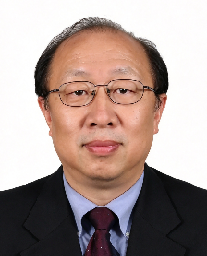
Professor Zhao’s research has centred on distributed and real-time computing, computer networks, information security, and cyber-physical systems. In 2006, while serving at the US National Science Foundation, he helped define cyber-physical systems as a distinct research area and established an early NSF funding programme supporting research in the field. His subsequent work helped connect CPS research with emerging applications in the Internet of Things and other networked intelligent systems. In 2011, he was appointed Chief Scientist of a national 973 Programme project on the Internet of Things, leading a consortium involving research institutions and universities in China and the University of Macau. The project addressed fundamental issues concerning information and execution fidelity in IoT systems and contributed to the development of theoretical frameworks for the field in China. He has also promoted international academic exchange and researcher development. In 2002, he founded the Dragon Star Programme, through which overseas Chinese scholars were invited to return to China to teach graduate courses in computer science, providing opportunities for collaboration and advanced training. Professor Zhao has published more than 400 research papers and has served as editor or associate editor of major journals in computer science, including IEEE Transactions on Computers, IEEE Transactions on Parallel and Distributed Systems, and Real-Time Systems. He has delivered invited and keynote lectures at international conferences and contributed to the development of professional communities in distributed computing and real-time systems. Through sustained research, academic leadership, and international collaboration, Professor Zhao has contributed to the development of distributed and cyber-physical computing and to the cultivation of computer science talent in China and internationally.

The International Academy of Eurasian Sciences is an international scientific organisation established in January 1994 and registered in the United Nations as a non-governmental organisation of UNESCO.
International Eurasian Academy of Sciences ASEAN Centre
secretariat@ieasth.org membership@ieasth.org