

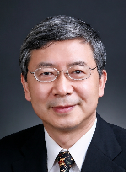
Professor Zheng’s research has centred on computer vision, pattern recognition, and cognitive computing, organised around a framework linking perception, cognition, and coordination. His work on stereo correspondence for visual scene understanding and statistical learning for visual attention has contributed to the theoretical and computational foundations of computer vision and image-based intelligent control. He has also pursued the translation of these methods into engineering systems, including visual information and image-processing technologies for aerospace applications, machine vision and automatic vehicle and licence-plate recognition, robotic assembly, and digital video processing. These achievements have received two National Science and Technology Progress Awards, a National Technological Invention Award, and a National Natural Science Award. Since 2000, he has focused extensively on autonomous driving, developing the unmanned vehicle “Xianfeng” and investigating AI architectures based on selective attention, intuitive reasoning, and hierarchical metric, topological, and semantic representations of driving environments. His research has also addressed human–machine collaboration, safety, and trustworthy AI. He has contributed to national AI strategy and education through advisory work for the Ministry of Science and Technology and leadership of pilot reforms in undergraduate AI education. Through sustained research, engineering development, and the training of scientists and engineers, Professor Zheng has contributed to the development of artificial intelligence, computer vision, and intelligent systems in China.

The International Academy of Eurasian Sciences is an international scientific organisation established in January 1994 and registered in the United Nations as a non-governmental organisation of UNESCO.
International Eurasian Academy of Sciences ASEAN Centre
secretariat@ieasth.org membership@ieasth.org