

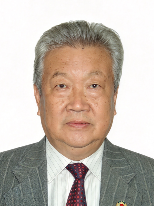
Professor Zhu’s scientific work has focused on porphyry copper deposits and on the theoretical interpretation of China’s mineral exploration practice. His co-authored monograph The Dexing Porphyry Copper Mine (1983) systematically examined the geology of the deposit. His early recognition that metallogenic belts extend across political boundaries led him to predict the continuation of the Soviet Altai metallogenic belt into Xinjiang, a proposition later supported by the discovery of the Ashele copper deposit. His most distinctive contribution was the establishment of prospecting philosophy, applying philosophical and methodological approaches to the systematic analysis of geological exploration practice. His An Introduction to Prospecting Philosophy (1992) developed this work into a distinct field of applied study. He formulated the principle of exploring areas around known deposits while continuing systematic prospecting in new regions, and developed the theory of step-wise development as a broader framework for understanding processes in nature and society. During his tenure as Minister, he was closely involved in major developments in China’s geological and mineral administration, including the promulgation of the Mineral Resources Law in 1986, nationwide prospecting programmes, the national gold exploration campaign, and reforms to geological exploration institutions. He also advanced policy discussions on resource conservation, strategic reserves, and resource security. Professor Zhu has published more than 100 academic papers and more than 10 books, including China’s Mineral Situation, Earth Sciences and Sustainable Development, and Mountains Without Bounds. Through sustained work spanning field geology, mineral exploration, resource administration, and applied philosophy, he has contributed to the development of geological science and mineral exploration in China and to the theoretical study of prospecting practice.

The International Academy of Eurasian Sciences is an international scientific organisation established in January 1994 and registered in the United Nations as a non-governmental organisation of UNESCO.
International Eurasian Academy of Sciences ASEAN Centre
secretariat@ieasth.org membership@ieasth.org