

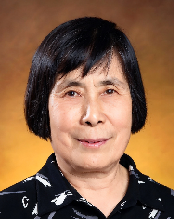
Professor Zhuang’s principal scientific contributions lie in fungal diversity and the systematics of the Ascomycota. Integrating classical morphology and anatomy with molecular phylogenetics, DNA barcoding, and structural analysis of ribosomal RNA, she developed approaches for incorporating rRNA secondary-structure information into quantitative phylogenetic analysis and advanced an integrative framework for the systematics of discomycetes. Her studies of the Helotiales and related groups contributed to revised concepts of families, genera, and systematic relationships, and she has undertaken comprehensive taxonomic studies of numerous key genera. She has completed monographic studies of three genera and described one new family, 13 new genera, and more than 360 new species, while resolving numerous taxonomic and nomenclatural problems in Chinese discomycetes. Based on extensive field collections from 26 provinces of China and numerous countries and regions, her work has contributed substantially to the documentation and conservation of China’s fungal resources. She also initiated regional programmes on fungal diversity in tropical and arid areas of China, integrating field surveys, taxonomy, molecular systematics, and database development. Her international contributions include participation in the ninth edition of Ainsworth & Bisby’s Dictionary of the Fungi, and two taxa have been named in her honour. She has led more than 20 major research projects, published more than 300 papers, and edited nine monographs. Her work has also extended to fungal resource evaluation and applied research, including the investigation and utilisation of Trichoderma resources. As a teacher and mentor, she has supervised graduate and doctoral students, contributed to the Encyclopaedia of China, and promoted public understanding of fungal science. Through sustained research, international collaboration, and the systematic documentation of fungal diversity, Professor Zhuang has contributed to the development of modern mycology in China and to the broader understanding of fungal systematics and biodiversity.

The International Academy of Eurasian Sciences is an international scientific organisation established in January 1994 and registered in the United Nations as a non-governmental organisation of UNESCO.
International Eurasian Academy of Sciences ASEAN Centre
secretariat@ieasth.org membership@ieasth.org