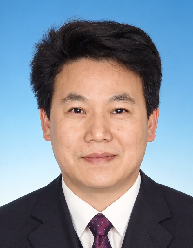
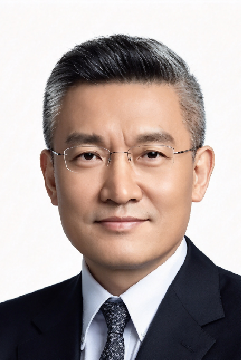
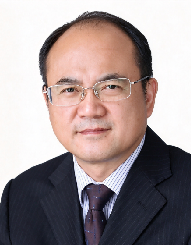
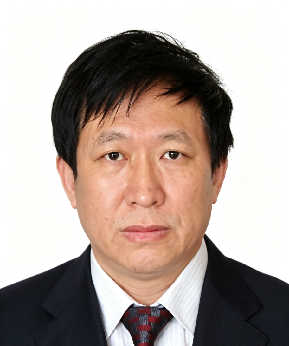
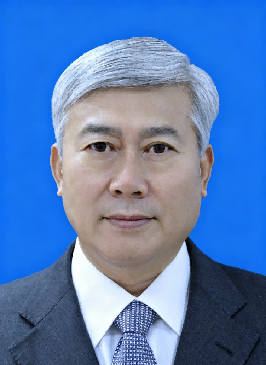
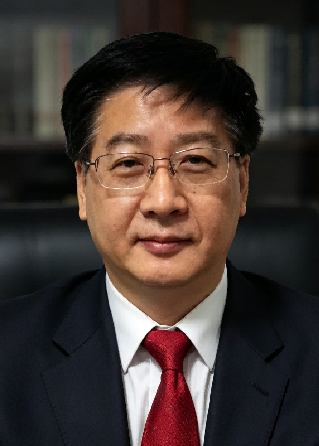
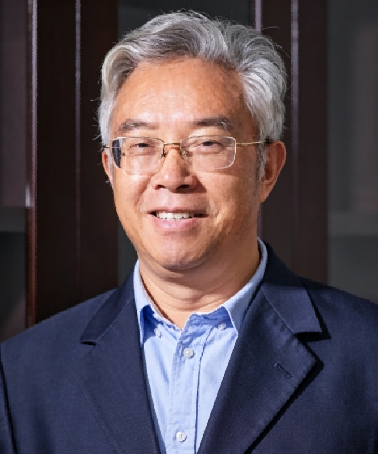
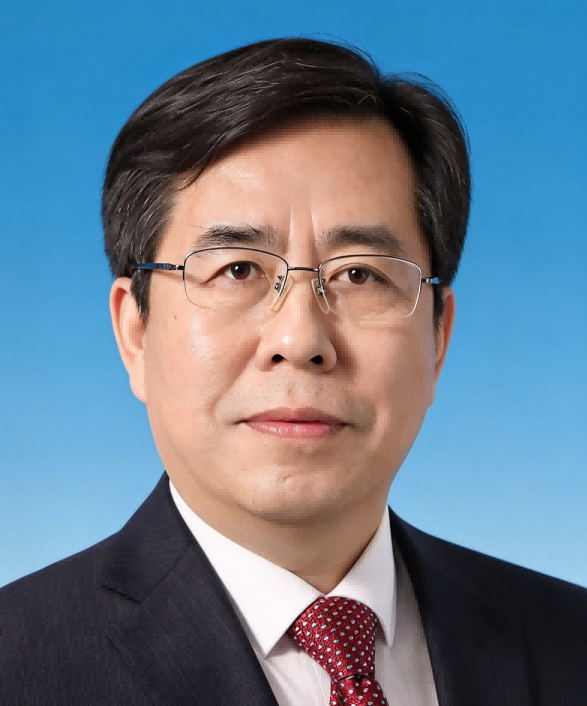
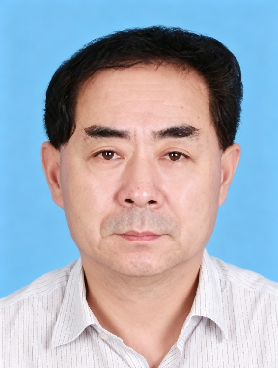
Qingjun ZHANG
Profile:
Elected Academician of the International Eurasian Academy of Sciences in 2020, Professor Qingjun Zhang is a Chinese space engineer whose professional work has focused on satellite remote sensing, spacecraft telemetry, tracking and command (TT&C) and communications, and spacecraft systems engineering. Born in May 1969 in Tongshan, Jiangsu Province, he received his bachelor’s degree in radio engineering from North China Electric Power University in 1990, his master’s degree in electric power systems and automation in 1993, and his Ph.D. in information and communication engineering from Huazhong University of Science and Technology in 2006. He joined the Fifth Academy of the China Aerospace Science and Technology Corporation, now the China Academy of Space Technology, in 1993 and spent more than a decade working on China’s manned spaceflight programme. He served as technical head of the TT&C and communications subsystem for Shenzhou 1, Director of the overall design office, and Deputy Chief Designer of Shenzhou 6. He subsequently served as Chief Designer and General Director of several major remote-sensing satellite programmes, including the ZY-1 (CBERS) resource satellite, HY-2 ocean dynamic environment monitoring satellite, GF-3 synthetic aperture radar (SAR) satellite, an ocean salinity detection satellite, and the Ludi Tance-4 high-orbit SAR satellite. He is currently Chief Designer and General Director of the high-orbit SAR satellite programme at the Beijing Institute of Spacecraft System Engineering and General Director of the Remote Sensing Satellite Division of the China Academy of Space Technology. An Academician of the Russian Academy of Cosmonautics, he was named one of China’s Ten Outstanding Young People in 2005 and has received the National May 1 Labour Medal, the Qian Xuesen Outstanding Contribution Award, and other national honours. His career has combined spacecraft systems engineering with the development and management of more than 20 remote-sensing